Optimization Methods for Injection Cooling Time of Plastic Molds
In plastic injection molding, cooling time constitutes 30%–70% of the total molding cycle and directly determines production efficiency, product quality, and manufacturing cost. Reasonable optimization of cooling time can shorten production cycles, increase output, reduce defects such as sink marks, warpage, and dimensional deviation, and lower energy consumption. Based on industrial practice, this article discusses systematic methods to optimize cooling time from mold design, process adjustment, material selection, and operational management.
Core Influencing Factors of Cooling Time
Cooling efficiency is determined by material properties, product structure, cooling system design, and processing parameters.Crystalline polymers such as PP, PE, and PA require cooling below their crystallization temperature, resulting in longer cooling cycles. Amorphous materials including ABS, PC, and PMMA can be ejected once cooled below their heat deflection temperature, allowing shorter cooling time.
Product wall thickness is the most critical factor: cooling time increases approximately 2–3 times with every 1mm increase in wall thickness. Complex geometries, ribs, and deep cavities also create uneven cooling and extend the cycle. The layout, diameter, and flow state of cooling channels dominate heat transfer efficiency, while melt temperature, mold temperature, and holding pressure indirectly affect thermal load and cooling duration.
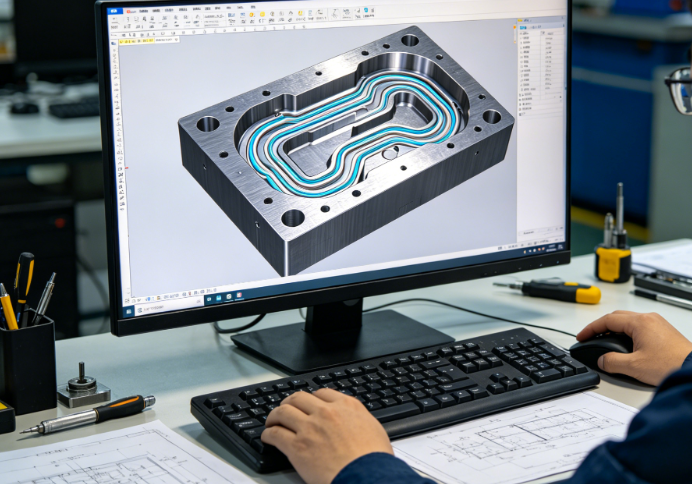
Optimization of Mold Cooling System Design
The cooling system is the primary path for heat dissipation, and its design is the most effective approach to reduce cooling time.
Rational Layout of Cooling Circuits
Cooling channels should follow the principle of conformal and uniform distribution. The distance between channels and cavity surfaces is typically maintained at 15–25mm, with channel spacing 3–5 times the diameter to eliminate hot spots. For regular products, straight-through water lines are sufficient. For complex curved parts, 3D-printed conformal cooling channels greatly improve heat exchange and can reduce cooling time by 20%–40% compared with conventional channels. Thick sections require intensified local cooling with denser circuits.
Structural Improvement of Water Lines
Water channel diameter is commonly 8–12mm; smaller diameters apply to precision parts and larger ones to heavy sections. Flow velocity should be controlled at 1–3m/s to maintain turbulent flow, which significantly improves heat transfer compared to laminar flow. A bottom-inlet and top-outlet arrangement prevents air pockets. For multi-cavity molds, parallel circuits ensure balanced flow distribution. Turbulators and baffles can be installed to enhance fluid disturbance and cooling performance.
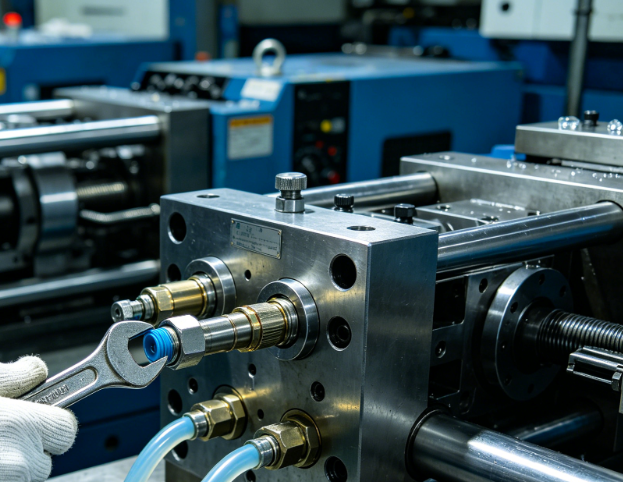
Auxiliary Cooling Structures
For difficult-to-reach areas such as thin ribs and deep cores, additional cooling methods are necessary. Spray cooling delivers direct high-speed water to targeted areas. Baffle cooling provides focused heat extraction in narrow spaces. Heat pipes can also be applied for high-efficiency heat conduction in areas where conventional water lines cannot be installed.
Adjustment of Injection Molding Parameters
Process optimization offers a quick and cost-free way to shorten cooling time without modifying the mold.
Melt temperature should be reduced moderately within an acceptable range to lower initial heat content, typically by 5–10°C to reduce cooling demand by 10%–15%. Mold temperature must be balanced: excessively high temperatures slow cooling, while overly low temperatures cause warpage.
Holding parameters should be optimized to avoid unnecessary heat accumulation. Holding time and pressure can be reduced appropriately once cavity packing is completed, helping shorten the effective cooling cycle.
Cooling water temperature is generally maintained at 15–25°C. Increased flow rate and regular removal of scale ensure stable heat exchange.
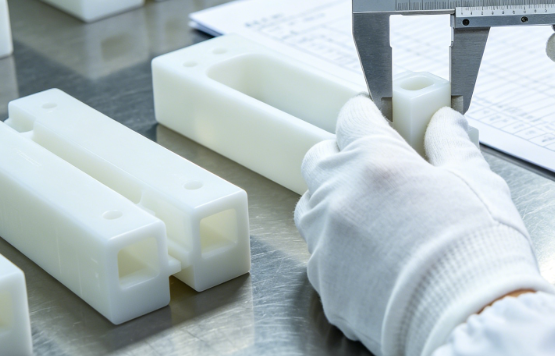
High-Conductivity Mold Materials and Surface Treatment
Thermal conductivity of mold materials directly affects cooling efficiency. Copper alloys such as beryllium copper provide 2–3 times higher conductivity than conventional steels and are widely used in critical thick sections. For general applications, pre-hardened steels with balanced thermal conductivity and durability are preferred. Appropriate surface treatments such as chrome plating and nitriding improve surface smoothness and heat transfer while extending service life.
Post-Molding Management and Quality Control
After achieving stable ejection, secondary air cooling can be applied for large products. Real-time quality inspection of dimensions and appearance ensures that shortened cooling time does not compromise quality. Continuous monitoring and recording of process parameters support long-term optimization.
Conclusion
Optimizing injection cooling time requires a systematic strategy combining mold design, process control, material selection, and production management. By implementing conformal cooling, turbulent flow circuits, appropriate parameter tuning, and high-conductivity materials, manufacturers can significantly reduce cycle time while improving dimensional stability and surface quality. Strict standardization of cooling system maintenance and process management ensures long-term, stable, and efficient production.