-
![Key Notes for PP Plastic Injection Molding Production]()
Key Notes for PP Plastic Injection Molding Production
PP plastic is a general-purpose thermoplastic crystalline material with excellent fluidity and a wide plasticization temperature range, but it also features high shrinkage and brittleness at low tempe
2026/01/29 Plastic Injection Molding
-
![Solutions for Insufficient Filling of Thin-Walled Parts in Plastic Molds]()
Solutions for Insufficient Filling of Thin-Walled Parts in Plastic Molds
Thin-walled plastic mold parts refer to those with a regular wall thickness of no more than 1.5mm. Insufficient filling is a common defect in their injection molding, mainly caused by high melt flow r
2026/01/29 Plastic Molds
-
![Leak Inspection and Sealing Repair for Plastic Molds]()
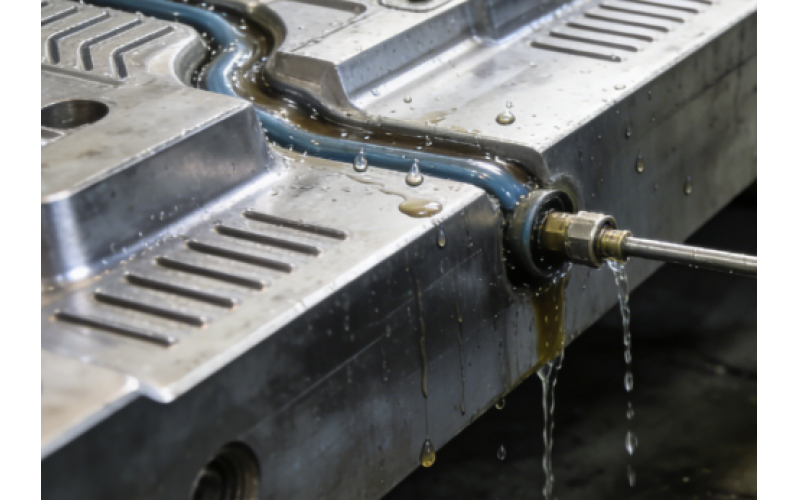
Leak Inspection and Sealing Repair for Plastic Molds
Cooling water channel leakage is a common fault in plastic mold injection production. Leaks cause mold rust, uneven mold temperature, and plastic part defects such as sink marks, deformation and weld
2026/01/29 Plastic Molds
-
![Methods for Determining Packing Switchover Position in Injection Molding]()
Methods for Determining Packing Switchover Position in Injection Molding
The packing switchover position is a core parameter in injection molding, marking the shift from injection to packing phase. It directly affects part filling, dimensional accuracy and surface quality—
2026/01/29 Injection Molding
-
![Mold Steel Selection for PE Products]()
Mold Steel Selection for PE Products
PE (polyethylene), a widely used general-purpose plastic, features non-abrasiveness, low melt viscosity, crystallinity, low molding temperature and non-corrosiveness. The core requirements for mold st
2026/01/29 Injection Molds
-
![Matching and Debugging Skills for Injection Pressure and Speed in Molding]()
Matching and Debugging Skills for Injection Pressure and Speed in Molding
Injection pressure and speed are core synergistic parameters in injection molding, determining melt filling state, flow path and product quality. Pressure provides driving force for melt flow, while s
2026/01/28 Injection Molds
-
![Temperature Stability Requirements for Thermoplastic Elastomer Injection Molding]()
Temperature Stability Requirements for Thermoplastic Elastomer Injection Molding
Thermoplastic elastomers (TPE/TPR, including SBC, TPU, TPO, TPEE and other types) combine the physical properties of elastomers with the processability of thermoplastic injection molding. The phase eq
2026/01/28 Injection Molding
-
![Repair Methods for Cavity Wear of Injection Molds]()
Repair Methods for Cavity Wear of Injection Molds
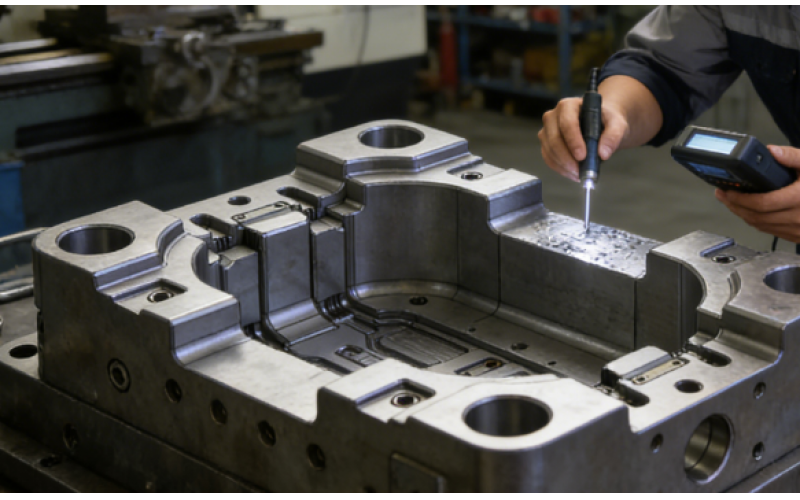
Injection mold cavities, the core of plastic molding, are prone to surface scratches, wear depressions and dimensional deviations due to long-term molten material scouring, high-pressure extrusion and
2026/01/27 Injection Molds